
This story is from The Pulse, a weekly health and science podcast. Subscribe on Apple Podcasts, Spotify, or wherever you get your podcasts.
Find our full episode on peptides here.
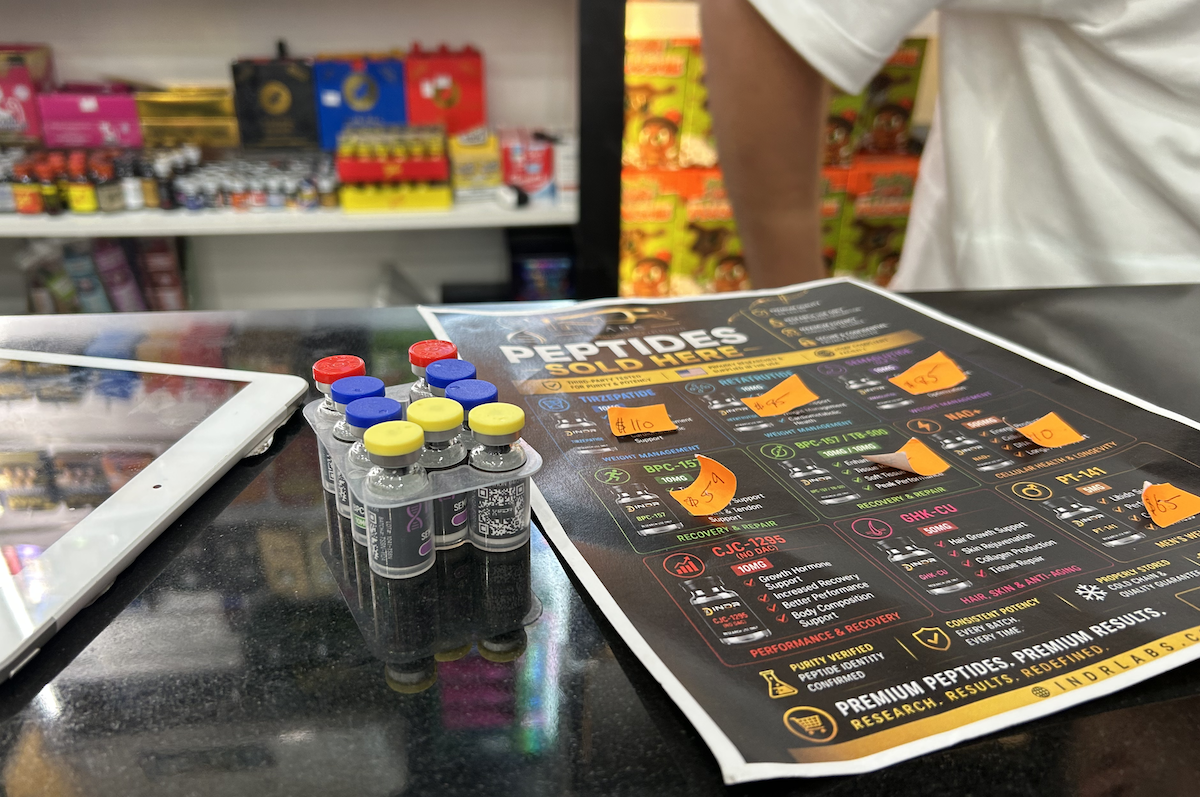
At a smoke shop in Williamsburg, Brooklyn, a poster hung in the window saying, “PEPTIDES SOLD HERE,” promoting one of today’s biggest and most controversial fitness trends.
“It’s been like two months since we first started selling them,” said the clerk behind the counter, when I asked him about the poster in July.
He said customers come in asking about them at least every other day.
A small flyer on the counter listed about a dozen peptide products promising to help with everything from weight management and muscle recovery to hair growth. Most cost around $95 a vial.
The clerk grabbed a tray of small vials from a shelf behind him. Each is filled halfway with white powder, covered with a black label, and topped with a brightly colored cap. Surprisingly, the packaging doesn’t look too out of place alongside the colorful vapes and nicotine pouches sold in the store.
The clerk explained that the powder needs to be mixed with water, typically bacteriostatic water, before being injected.
“Then you could just buy a needle from CVS or anywhere that you can find and just inject it,” he said.
These injectable peptides have been used in bodybuilding and biohacking circles for years but have recently started hitting the mainstream. They’re now popping up as treatments in wellness spas, being hawked over social media, and apparently even sold in smoke shops.
Notably, the vials carry an important disclaimer in small print: “Research Use Only.”
The label suggests these products are intended for laboratory research rather than human use, however, simply writing “Research Use Only” on a vial doesn’t allow sellers to get around drug laws.
This year, the Food and Drug Administration sent warning letters to several peptide companies using similar disclaimers, saying other evidence, including claims on their websites, showed the products were actually being marketed for human use.
But that hasn’t stopped this gray market from growing in popularity despite safety risks.


